ACPA Emerging Scholars
The ACPA Emerging Scholars Program was implemented by the ACPA Senior Scholars in 1999. The Emerging Scholars Program supports, encourages, and honors early-career individuals who are emerging as contributors to student affairs and higher education scholarship and who are pursuing research initiatives congruent with the mission, interests, and strategic goals of ACPA.
Emerging Scholar Program candidates must have an earned doctorate and must be or become members of ACPA.
Recipients of the award are recognized as Emerging Scholar-Designees and serve as two-year term. Emerging Scholar-Designees who have fulfilled their research and scholarly leadership commitments – as specified in their applications – by the end of their two-year term will receive the ACPA Emerging Scholars Award.
Emerging Scholar Expectations
In addition to completing the scholarly leadership commitments and research project noted in your application, the emerging scholars will meet regularly, including with senior scholars as needed. Emerging scholars are expected to attend the ACPA Convention for the duration of their program. The relationship between emerging and senior scholars are envisioned as reciprocal.
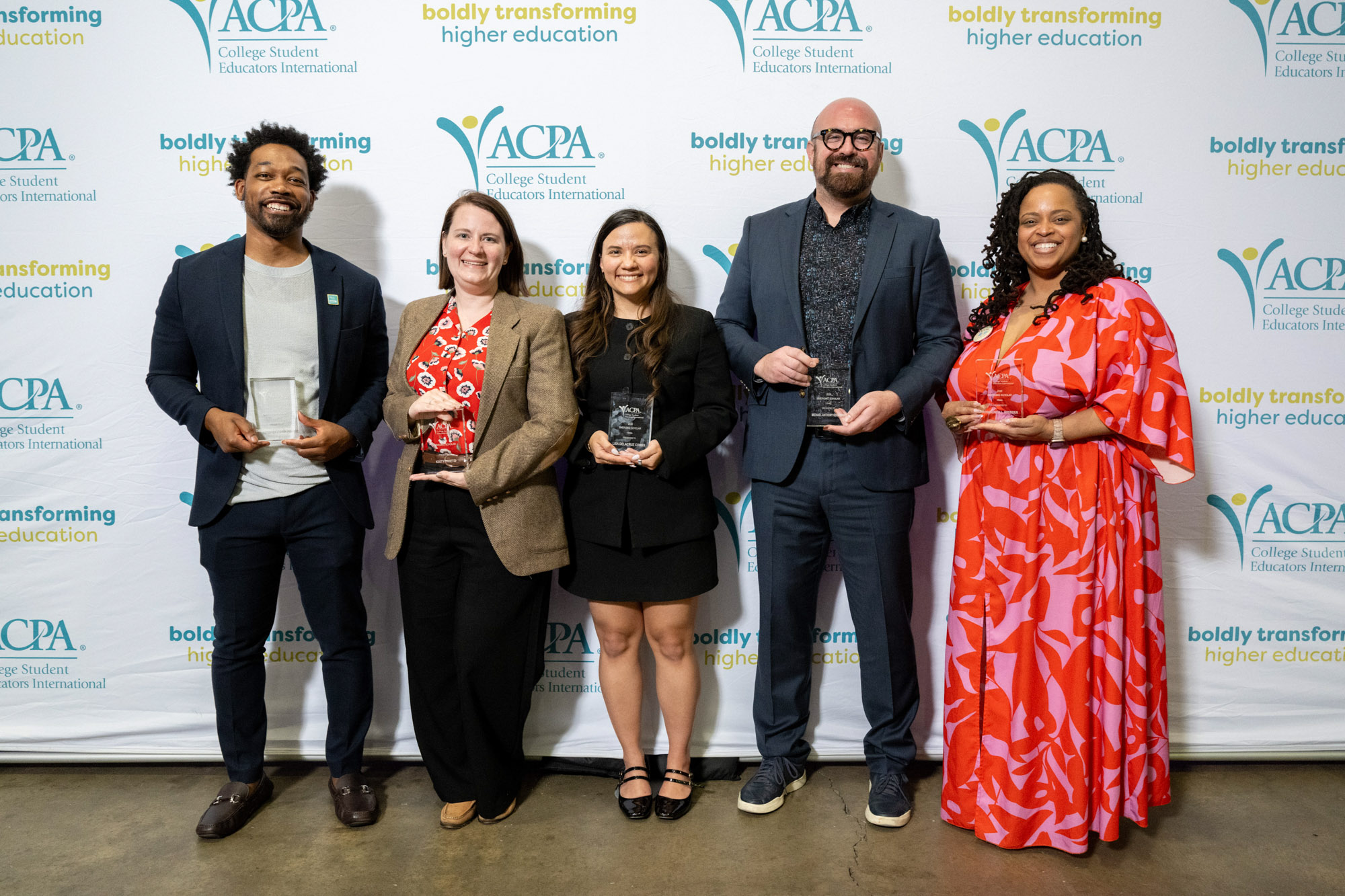
Become an Emerging Scholar
applications due 30 October 2026
We are now accepting applications for the Class of 2027-2029 ACPA Emerging Scholar-Designees. Recipients will be announced as 2026-2028 ACPA Emerging Scholar-Designees (that is, from the 2027 Annual Convention through the 2020 Annual Convention and each will receive a research grant from ACPA. The Emerging Scholar-Designees who have fulfilled their research and scholarly leadership commitments – as specified in their applications – by the end of their two-year term will be designated as ACPA Emerging Scholars. Requests for a one-year unfunded extension or renegotiation of the specified leadership commitments by Emerging Scholar-Designees will be considered on a case-by-case basis.
Newly selected Emerging Scholar-Designees must participate in a meeting with the Senior Scholars at ACPA27 in Toronto, Ontario, Canada; meetings are traditionally held the day prior the and the day of the Opening Session. For ACPA27 in Toronto, those dates are Sunday, 17 March and Monday, 18 March 2027.
Times are subject to change depending on the format of the 2027 Annual Convention.
All emerging scholar-designees must register for the convention
Eligibility
- Applicants must be an ACPA member.
- Applicants must not have received tenure.
- Applications must have a demonstrated record of scholarly productivity related to student affairs or college students.
Application Process
Applicants for 2026-2028 ACPA Emerging Scholar-Designee must submit the following materials in a single PDF document saved as “Emerging Scholars Application – Last Name” by 11:59pm ET on 30 October 2026.
- Letter of interest that includes the following:
- An explanation of how your scholarly interests and trajectory align with those found in ACPA’s A Bold Vision Forward: A Framework for the Strategic Imperative for Racial Justice and Decolonization.
- A description of your in-progress or completed work that demonstrates your scholarly activity. Address the potential impacts or significance of your work to the field of student affairs.
- A description of your current and past involvement with ACPA, including any leadership positions you have held.
- A statement of your willingness to complete at least two proposed scholarly leadership commitments (see below) during the Emerging Scholars Program two-year period. Please indicate which opportunities you would choose and why.
- Co-coordinate (with a current Senior Scholar or another Emerging Scholar) an ACPA convention session or pre- convention session designed to advance the goals SIRJD.
- If selected, serve as designated Scholar-in-Residence (minimum one-year term) for an ACPA Commission, Coalition, or other formally constituted group.
- Submit a scholarly piece to Developments.
- Other (to be proposed by the candidate) that will advance ACPA’s mission, vision, values, or Strategic Imperative and is consistent with the applicant’s scholarly agenda. Applicants should describe the proposed commitment in sufficient detail to foster understanding of its content and scope during the ACPA Emerging Scholar-Designee review and selection processes.
- Tell us about the opportunities you have had for scholarly support in your doctoral program and your career to date and any challenges to your scholarly productivity (e.g., uncompensated administrative responsibilities, teaching load, access to mentoring, internal grant opportunities, etc.).
2. Current CV.
3. Research project proposal of no more than three single-spaced pages, excluding cover page and reference list. The proposed research project should focus on college students and/or the student affairs profession and be an original scholarly contribution; while co-authorship is acceptable, the applicant should be the primary investigator. Editing of others’ work (e.g., proposing an edited book) does not meet the expectations for the Emerging Scholar research project. Proposal should include the following items:
- A description of the proposed research project (including description of methodology and methods), how the study advances the applicant’s broader research agenda, and how the research supports the Strategic Imperative for Racial Justice and Decolonization.
- A proposed time frame (ordinarily, no longer than the designee’s two-year term as ACPA Emerging Scholar-Designee).
- A brief project budget. Funds may be used for operating expenses including travel for data collection or dissemination. Funds may not be used to purchase equipment or to offset or supplement the designee’s salary or solely to cover conference travel. ACPA funding may not be used to cover F&A/indirect costs.
- An explanation of how the proposed research project, within the context of the applicant’s overall research agenda, advances ACPA’s mission, vision, and values as well as ACPA’s Strategic Imperative for Racial Justice and Decolonization (SIRJD).
- A commitment to present research findings at a minimum of one ACPA convention during the designee’s two-year term (i.e., 2026 Emerging Scholar-Designees must present at either the 2027 or the 2028 convention as part of the sponsored Emerging Scholar research sessions).
Commitments
In addition to completing the scholarly leadership commitments and research project noted in your application, the emerging scholars will meet with the senior scholars bi-monthly. Emerging scholars are expected to attend the ACPA Convention for the duration of their time as Emerging Scholar Designees. The relationship between emerging and senior scholars is envisioned as reciprocal.
If you have any questions, please contact Dr. Natasha Croom (nncroom@clemson.edu).
current Emerging Scholar Designees
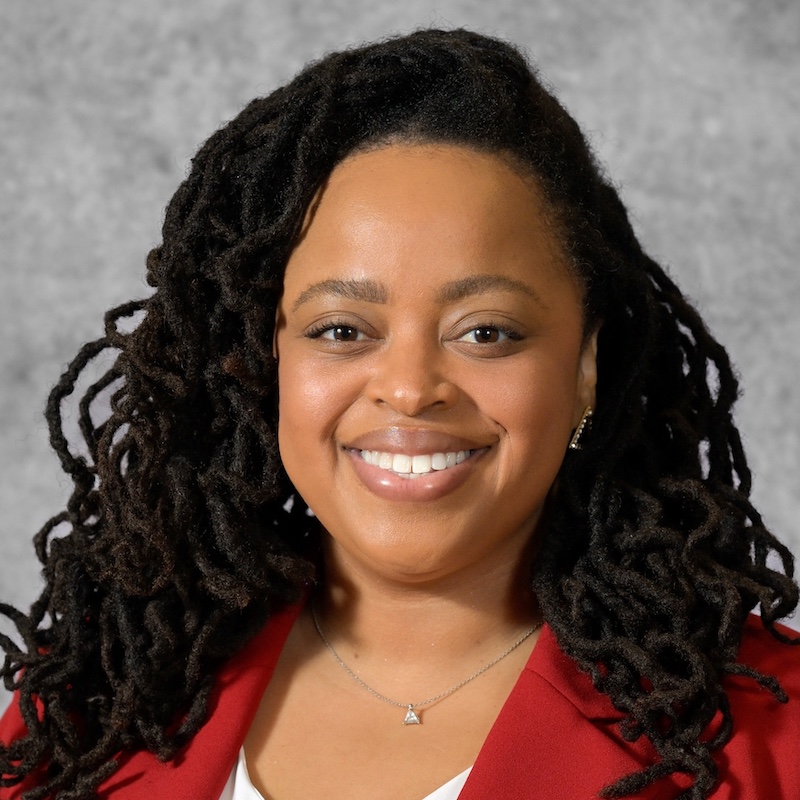
Roshaunda L. Breeden

Kaity Prieto

Lisa Delacruz Combs
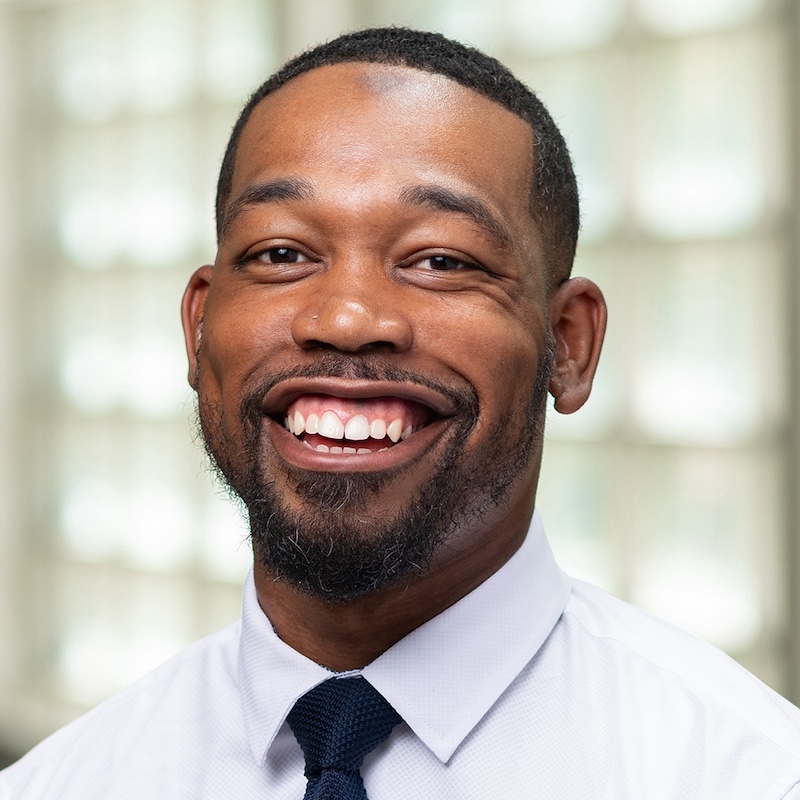
Christopher S. Travers
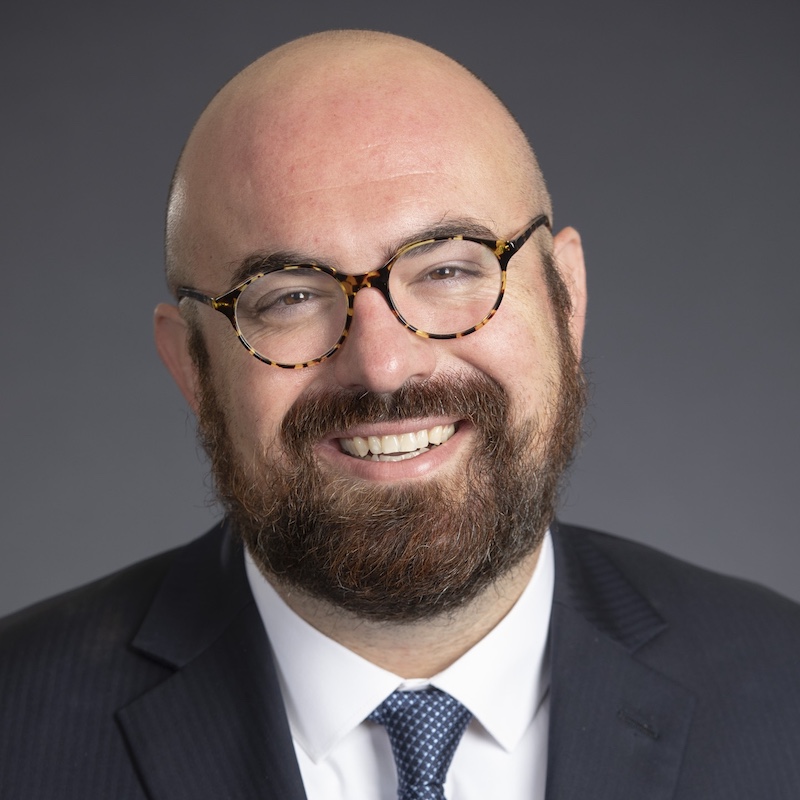
Michael Anthony Goodman
past emerging scholars
2025
Jesse R. Ford
Dajanae Palmer
Quortne R. Hutchings
Stephanie Hernandez Rivera
Alex C. Lange
2024
Reginald Blockett
Elisa Cain
Candace N. Hall
Moira Ozias
Stephen Santa-Ramirez
Brittany M. Williams
2023
Genia Bettencourt
Kaleb L. Briscoe
Antonio Duran
Laila McCloud
TJ Steward
2022
Stacey D. Garrett
Orkideh Mohajeri
Amanda Mollett
Wilson Okello
Leslie Jo Shelton
2021
Crystal E. Garcia
Ryan A. Miller
Steve D. Mobley, Jr.
Demetri L. Morgan
Leonard D. Taylor, Jr.
2020
Royel M. Johnston
Katie Koo
Symphony D. Oxendine
Dian Squire
Rachel Wagner
2019
Sonja Ardoin
Claudia Garcia Louis
Keon M. McGuire
Eugene T. Parker III
Tricia Shalka
2018
Cameron C. Beatty
D. Chase J. Catalano
Tonisha B. Lane
Hyun Kyoung Ro
Teniell L. Troilan
2017
Jason C. Garvey
Jessica C. Harris
Darris R. Means
Rosemary Perez
Christa J. Porter
2016
Milagros Castillo-Montoya
Chayla Haynes Davison
Claire Kathleen Robbins
Andrew J. Ryder
Dan Tillapaugh
2015
Cassie L. Barnhardt
Natasha N. Croom
Michael Hevel
Ezekiel Kimball
Lucy LePeau
Donald Mitchell, Jr.
Mahauganee Shaw
2014
Georgianna Martin
Matthew Johnson
David Perez
V. Leilani Kupo
OiYan Poon
Chris Linder
2013
Paige Haber-Curran
Nolan Cabrera
Casandra Harper
Bradley Cox
Eunyoung Kim
James DeVita
2012
Noah Drezner
Christina Lunceford
Keith Edwards
Corey Rumann
Kathy Guthie
2011
Judy Kiyama
Ebelia Hernandez
Robert Palmer
Jody Jessup-Anger
Kirsten Kennedy
2010
Mimi Benjamin
Julie J. Park
Kimberly A. Griffin
Tricia A. Seifert
Frank Harris III
2009
Samuel D. Museus
Alyssa N. Bryant
Stephen John Quaye
John P. Dugan
Dawn Rene Johnson
2008
Penny A. Pasque
Heather T. Rowan
Andrew F. Wall
2007
Joy Gaston Gayles
Terrell L. Strayhorn
Susan D. Longerbeam
Sarah H. Marshall
2006
Elisa Abes
Brian Bridges
2005
Shaun R. Harper
Bridget Turner Kelly
Lori D. Patton
2004
John Hernandez
D-L Stewart
Shouping Hu
John A. Mueller
Audrey Jaeger
Robert Reason
2003
Jenny Lee
Katie Branch
Kristen Renn
Scott Brown
Christine Cress
Matthew Wawrzynski
2002
Patrick Dilley
Janice Taylor
Karen Inkelas
Sherry Watt
John Lowery
Maureen Wilson
2001
John Foubert
Florence A. Hamrick
Susan Robb Jones
Raechele L. Pope
2000
No Recipients
1999
Jan L. Arminio
Ellen M. Broido
Deborah Faye Carter
Tracy L. Davis
Sharon Fries-Britt
Anna Ortiz
E. Michael Sutton
Donna M. Talbot
Siu-Man “Raymond” Ting
Vasti A. Torres